Ride around Toulouse between plains and reliefs
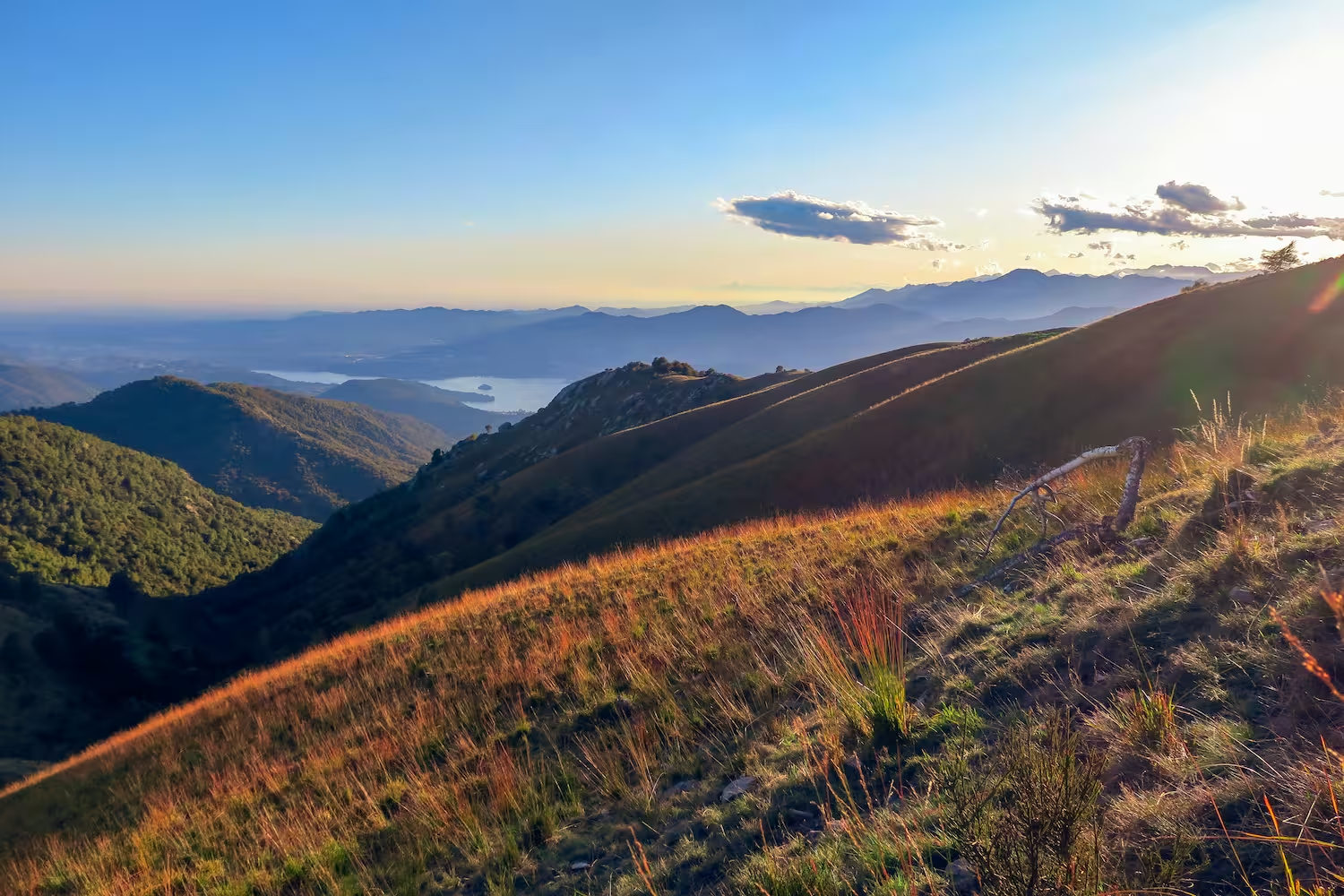
Toulouse is located at the crossroads of several territories. To the east, Lauragais extends its cereal plains to Naurouze. To the south, the hills herald the beginning of the Pyrenees. To the west, the hills of Gascony undulate towards the Atlantic. These landscapes offer varied motorcycle tours less than an hour from downtown.
Try the platform of motorcycle rental in Toulouse : Good Motors, for a smooth experience without the constraints of traditional rental agencies.
The context: between Garonne and Pyrenean foothills
The Toulouse region occupies the Garonne Valley and its surroundings. The river crosses the city from east to west. To the north, the plains of Tarn and Tarn-et-Garonne stretch as far as the eye can see. To the south, the relief rises gradually towards the Pyrenean chain visible on a clear day.
Lauragais refers to the territory located between Toulouse and Carcassonne. This historic passage area between the Atlantic and the Mediterranean has seen merchants, armies and pilgrims circulate for centuries. The Canal du Midi crosses it from west to east. The hills of the South-West include the reliefs of Comminges, Volvestre and the Gascon hills.
Itinerary 1: Le Lauragais via the D2
The D2 leaves Toulouse to the east in the direction of Villefranche-de-Lauragais. The road crosses the suburbs and then enters the fields. The landscape opens up quickly. Cropland dominates. Wheat, sunflower and rapeseed according to the seasons. The ripples are soft.
Villefranche-de-Lauragais is located thirty kilometers from Toulouse. This country house was founded in 1280 by Philippe le Hardi. The central covered square preserves its medieval arcades. The red brick houses typical of Lauragais line the streets. This brick comes from local clays baked in the tile factories that lined the region until the 20th century.
Continue to Nailloux by the D622. The relief remains flat. Isolated farms dot the fields. The village served as a stopover on the road between Toulouse and Carcassonne.
From Nailloux, take the D25 south to Calmont. The road climbs slightly. The first undulations appear. Calmont dominates a small valley. The 12th century Romanesque church stands in the center of the village. The limestone walls contrast with the brick of the surrounding houses.
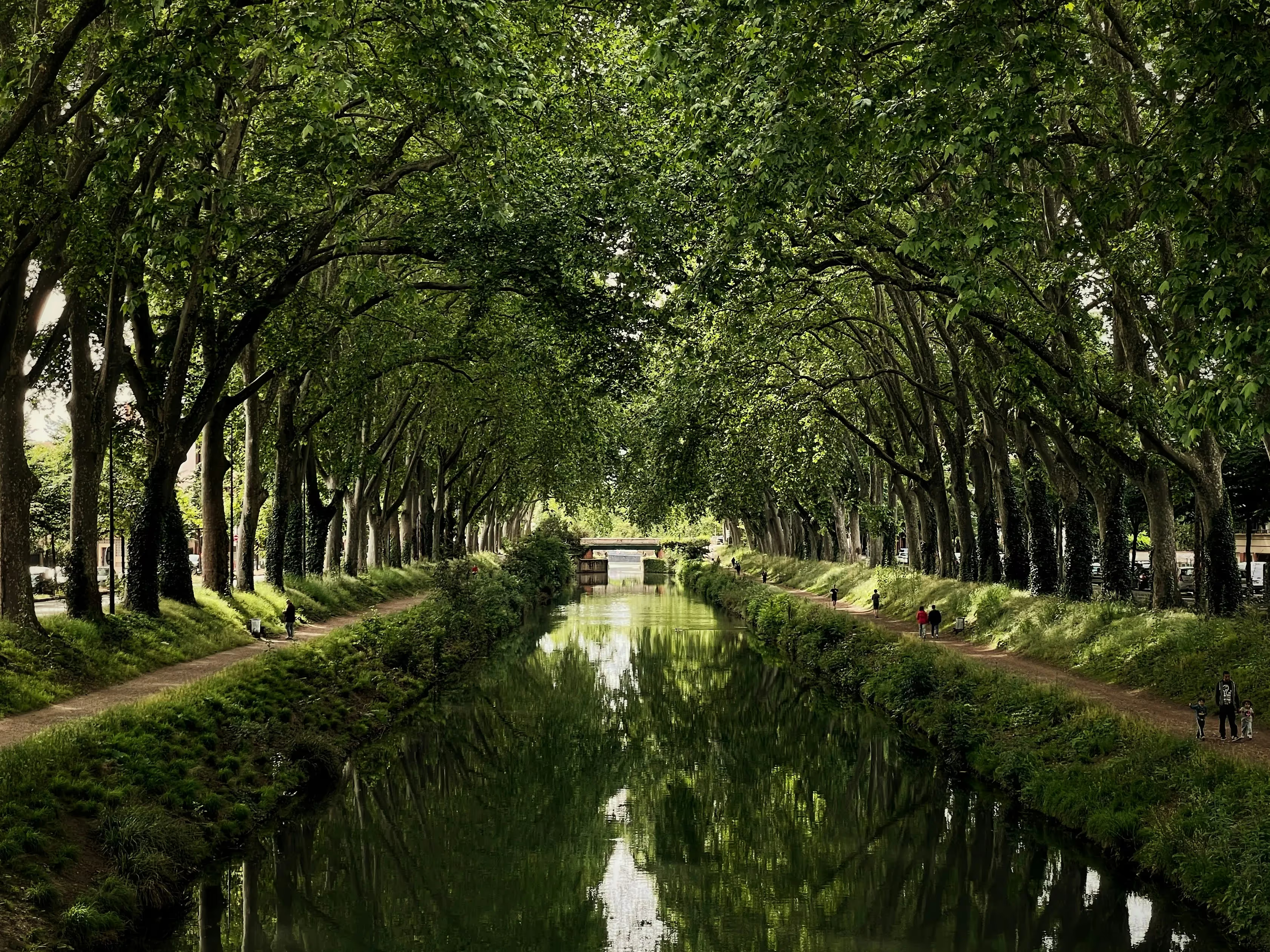
Return to Toulouse via Aureville and Ayguesives. The D16 runs along the Canal du Midi for several kilometers. The canal was dug between 1667 and 1681 under the direction of Pierre-Paul Riquet. It linked Toulouse to the Mediterranean. The plane trees that border it were planted in the 19th century to stabilize the banks and provide shade. This circuit covers approximately ninety kilometers.
Itinerary 2: The Volvestre hills
Head south from Toulouse via the D117. The road goes to Muret then Carbonne. The landscape changes after Carbonne. The first hills are emerging. Fields give way to meadows and woods.
Carbonne is located forty kilometers from Toulouse. The village has a wooden hall from the 19th century. Markets have been held there ever since. Cross the Garonne and take the D635 to Martres-Tolosane.
Martres-Tolosane has been known for its earthenware since the 18th century. The workshops produced decorated tableware that was exported all over Europe. Some factories are still operating. The village preserves half-timbered houses dating from the 16th century.
Continue on the D10 to Saint-Martory. The road snakes between the hills. The slopes are covered with oak and chestnut trees. Saint-Martory is nestled in a narrow valley. The medieval bridge with four arches spans the Garonne. It was built in the 14th century to facilitate the passage of pilgrims to Compostela.
Head north via Salies-du-Salat. This small spa town has been exploiting its springs since ancient times. The Romans installed baths there. The current thermal baths date from the 19th century.
Return to Toulouse via Boussens and the N117. This route totals about one hundred and thirty kilometers. The hills reach a height of three hundred meters. The panoramas towards the Pyrenees multiply on a clear day.
Itinerary 3: The hills of Gascogne
Take the D632 west from Toulouse. The road crosses Léguevin then Daux. The relief undulates slightly. Crops alternate with vineyard plots. The Saint-Mont vineyard extends into this zone.
Gimont is located fifty-five kilometers from Toulouse. This Gascon country house was founded in 1266. The central wood-frame hall covers over a thousand square meters. It has welcomed the market since the 13th century. Half-timbered houses made of red brick and round pebbles line the streets. These pebbles come from Pyrenean rivers carried by waterways.
Continue to Mauvezin on the D654. The hills follow one another. Gascon farms can be recognized by their massive architecture. The thick stone and brick walls protected from the winter cold and summer heat. The roofs with four slopes covered both the house and the barns. Mauvezin also has an 11th century castle.
Go back down to Cologne via the D654 and then the D654. Cologne is located on the banks of the Sava. The village preserves a 12th century Romanesque church with a typical Gascon bell tower and wall.
Return to Toulouse via L'Isle-Jourdain. This circuit covers approximately one hundred forty kilometers. The hills do not exceed 250 meters, but the valleys widen between them.
Weather and seasons in the Toulouse region
The climate in Toulouse combines oceanic and Mediterranean influences. Summers are hot and dry. Temperatures regularly reach thirty to thirty-five degrees between June and August. Thunderstorms frequently break out in the late afternoon.
Spring and autumn offer the best conditions. Temperatures range between fifteen and twenty-five degrees.
Winter remains mild in the plains. Temperatures rarely drop below zero.
Check the weather forecast before you leave. Bring water in summer. Water points are becoming rare in arable areas. Pack a lightweight jacket in spring and fall. Temperatures drop rapidly in the evening.
Practical advice
The circuits around Toulouse are covered in one day. Leave in the morning, Les bastides du Lauragais have restaurants in their central squares. Gascon villages offer tables in former post inns.
Motorcycle parking is not a problem in towns. Places are free outside major cities. Tourist offices provide detailed maps of secondary routes.
Good Motors offers self-service motorcycle rental 24 hours a day with pick-up in the city or at the station depending on the destination.
Ride around Toulouse
The motorcycle routes around Toulouse cross varied landscapes. The Lauragais unfurls its cultivated plains. The hills of the South-West offer beautiful reliefs. The Gascon hillsides undulate to the west.
The local architecture tells the story of the region. Medieval bastides structure the territory. Brick farms bear witness to the agricultural past. The villages preserve their Romanesque and Gothic heritage. These elements line the roads and enrich the breaks.
Rent a motorcycle on Good Motors: https://goodmotors.agency