Marseille, starting point to three distinct territories
Marseille is located between sea and mountains. Three zones are outlined around the city. The rocky coast to the east. The limestone mountains in the north and in the center. The coastline to the west. Each territory offers different landscapes. One day is enough to explore one of them.
The coast of the calanques, from Marseille to Toulon
The land
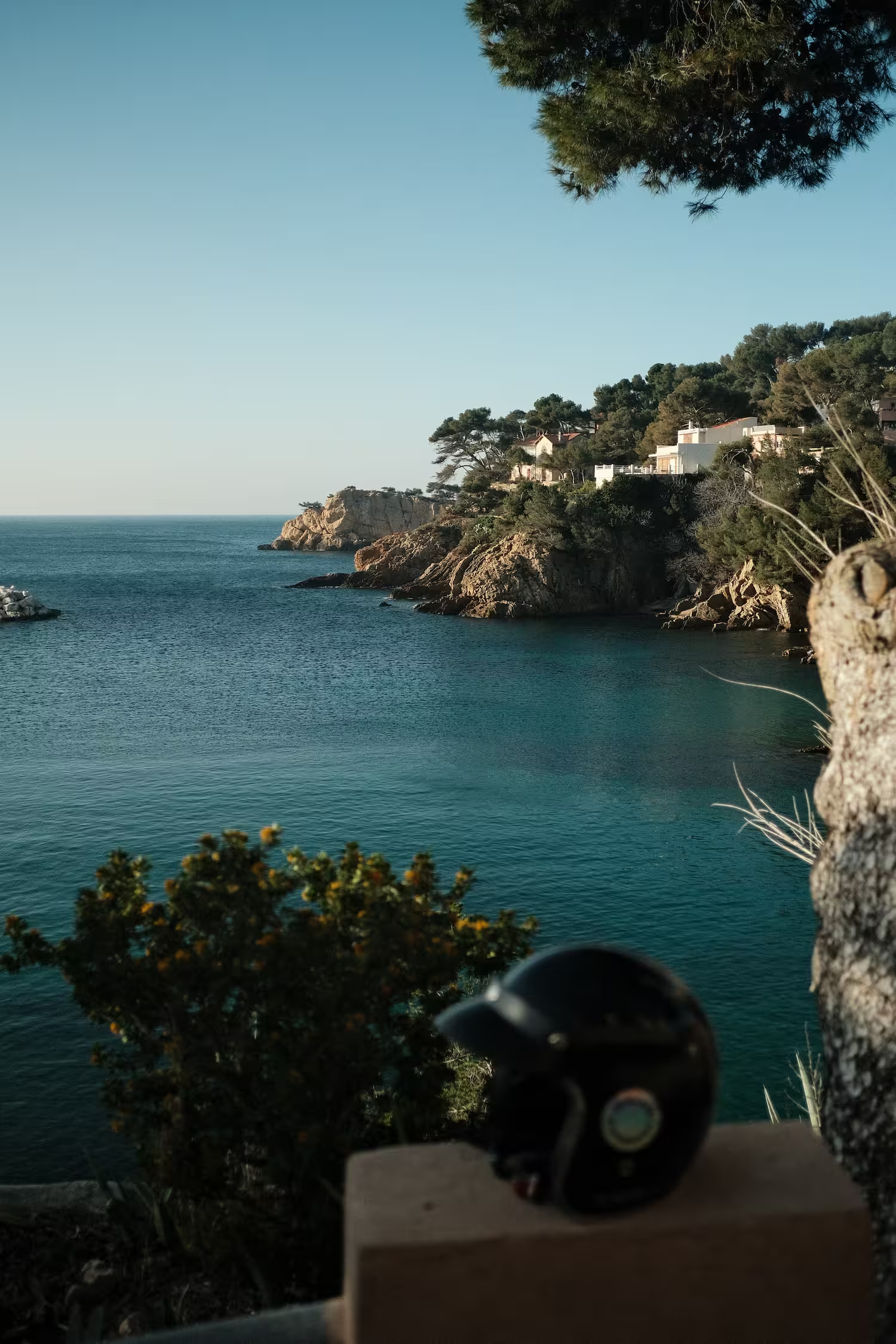
The coastline between Marseille and Toulon extends over eighty kilometers. Limestone cliffs plunge into the Mediterranean. The calanques cut the coastline between Marseille and Cassis. Cap Canaille dominates La Ciotat. Further east, the relief softens towards Bandol and then Toulon.
The route of the crests
The D559 leaves Marseille via the Kennedy Corniche. It climbs rapidly over the sea. The turns follow one another for fifteen kilometers. The calanques of Sugiton, Morgiou and En-Vau appear below. The turquoise water contrasts with the clear rock. The road overlooks the peaks by one hundred to two hundred meters. The panoramas can be discovered at every turn.
Cassis and its vineyard
The descent leads to Cassis. This fishing port is organized around a protected basin. The colorful facades are reflected in the water. Restaurants line the wharf. Cassis white wine comes from vines planted on the limestone slopes. These arid hillsides have been producing dry wine since ancient times. The Romans were already exporting this production to Rome.
Cape Canaille
The D141 bypasses Cap Canaille between Cassis and La Ciotat. This cliff reaches three hundred and sixty-three meters. It is the highest sea cliff in Europe. The road snakes on the side. The laces go down to La Ciotat. The view covers the whole bay.
La Ciotat and the shipyards
La Ciotat developed around its shipyard. Ship hulls have been built here since the 16th century. Port cranes still dominate the landscape.
Bandol and the Var coastline
The road continues to Bandol via the D559. The relief is leveling out. Beaches replace cliffs. Bandol produces a renowned red wine. The Mourvèdre grape variety dominates. The vineyards stretch between the sea and the hills. Six-Fours-les-Plages then Toulon finish this coastal route.
Limestone mountains, natural barriers around Marseille
Geography of the mountains
Three mountains surround Marseille. The North Star rises to five hundred ninety meters. The Garlaban to the east reaches seven hundred and fifteen meters. Sainte-Baume dominates to the north-east with one thousand one hundred forty-seven meters. These limestone reliefs form barriers between the city and the hinterland.
The Massif de l'Étoile
The D8 goes around L'Étoile from the north. It connects Marseille to Aix-en-Provence. Limestone is everywhere. Aleppo pines cover the slopes. The mining villages of Gardanne and Mimet bear witness to the exploitation of coal and bauxite.
Le Garlaban, Pagnol mountain
The Garlaban massif rises between Aubagne and Allauch. Marcel Pagnol described these hills in his novels. La Treille, the village of his childhood, is nestled at the foot of the massif. Provençal country houses dot the valleys. The road crosses the massif from east to west. The turns follow one another for twenty kilometers. The views are clear towards Marseille and the sea.
Sainte-Baume, forest and sanctuary
Sainte-Baume is located north-east of Aubagne. The D80 climbs from Gémenos to Plan d'Aups. The laces go up for fifteen kilometers. The pines give way to oaks and then to beech trees. This deciduous forest is unique in Provence. The Sainte-Baume cave is nine hundred forty-six meters away. Mary Magdalene would have lived there according to tradition. A sanctuary was built there in the Middle Ages. Pilgrims climb the trail from the parking lot. The road goes down again through Nans-les-Pins. The turns increase on the descent.
The backcountry
The Etang de Berre
The Étang de Berre extends to the west of Marseille. This body of salt water covers fifteen thousand hectares. It communicates with the sea through the Caronte Channel. Industrial facilities line the north and east shores. The south shore preserves more preserved landscapes.
Martigues, the Provençal Venice
Martigues occupies the banks of the Caronte Channel. Canals cross the city. Fishermen's houses are reflected in the water. Colourful facades have attracted painters since the 19th century. The district of the island maintains its ancient character. Bridges connect the different parts of the city.
Saint-Chamas and the Roman bridge
Saint-Chamas is located north of the pond. The Flavien bridge spans the Touloubre at the entrance to the village. This Roman work dates from the 1st century. Two triumphal arches frame the bridge. The road follows the shore of the pond to Berre.
La Crau, desert of stones
The Crau plain extends south-east of the pond. Millions of pebbles cover the ground. The Durance deposited them thousands of years ago. This arid landscape is unique in France. The D113 crosses Crau from west to east. Isolated farms dot the area.
Salon-de-Provence
Salon is located north of La Crau. The city is backed by the Fare chain. The Château de l'Empéri dominates the old town. This medieval fortress was the residence of the archbishops of Arles.
Organize your motorcycle day
Choose according to the weather
On Mistral days, choose wooded areas. The Garlaban and Sainte-Baume protect better than the coast or the Crau. On calm days, all routes are suitable. The summer heat makes the climb to Sainte-Baume attractive.
Plan breaks
The villages offer rest points. Cassis, La Ciotat, Martigues and Salon have centers with shops and restaurants.
Motorbike rental
Good Motors offers self-service motorcycle rental 24 hours a day with pick-up at Marseille Saint Charles train station.
The roads around Marseille offer three distinct atmospheres. The rocky coastline imposes its bends above the sea. The limestone mountains offer wooded reliefs and the hinterland of hilltop villages. Each corner can be discovered in one day. Landscapes are changing rapidly. The Mediterranean remains visible from most heights. The climate allows you to drive all year round.
Book a motorcycle directly on the site: https://goodmotors.agency/